The Fight Against Infant Mortality
Introduction
Infant mortality remains a dire issue for many developing countries. Although the world has made great progress in dramatically decreasing infant mortality through healthcare innovations and increases to quality of life, many developing countries continue to struggle because of inadequate infrastructure, the rampant spread of diseases and lack of proper sanitation. Target 3.2 of the United Nations’ Sustainable Development Goals entails ending preventable deaths of newborns and children under five by 2030, with all countries aiming to reduce neonatal fatality to at least as low as 12 deaths per 1,000 live births and under-5 mortality to as low as 25 deaths per 1,000 live births.
Infant mortality is an important indicator of a country’s economic and human development, a reflection of that country’s socioeconomic standing, effectiveness of healthcare system and shows underlying inequalities. This project aims to shed light on the current global situation, identifying broader global trends and key areas where further attention and support is deemed necessary.
Two datasets, both made available by Our World in Data, have been utilized for this project. The infant mortality rate dataset was sourced from the United Nations Inter-agency Group for Child Mortality Estimation, while the GDP per capita dataset was sourced from the World Bank and OECD national accounts.
Questions to Consider
How has the average global infant mortality rate changed over the decades? What is the prevailing trend of infant mortality rate among groups of countries over the last three decades?
Which countries and continents have the highest infant mortality rate in the most recent year?
What is the infant mortality rate for all countries in the most recent year, and which countries have the highest rates?
What is the correlation between a country’s infant mortality rate and its GDP per capita?
Summary of Findings
Global infant mortality rate has halved over the last three decades, and decreased among all income groups
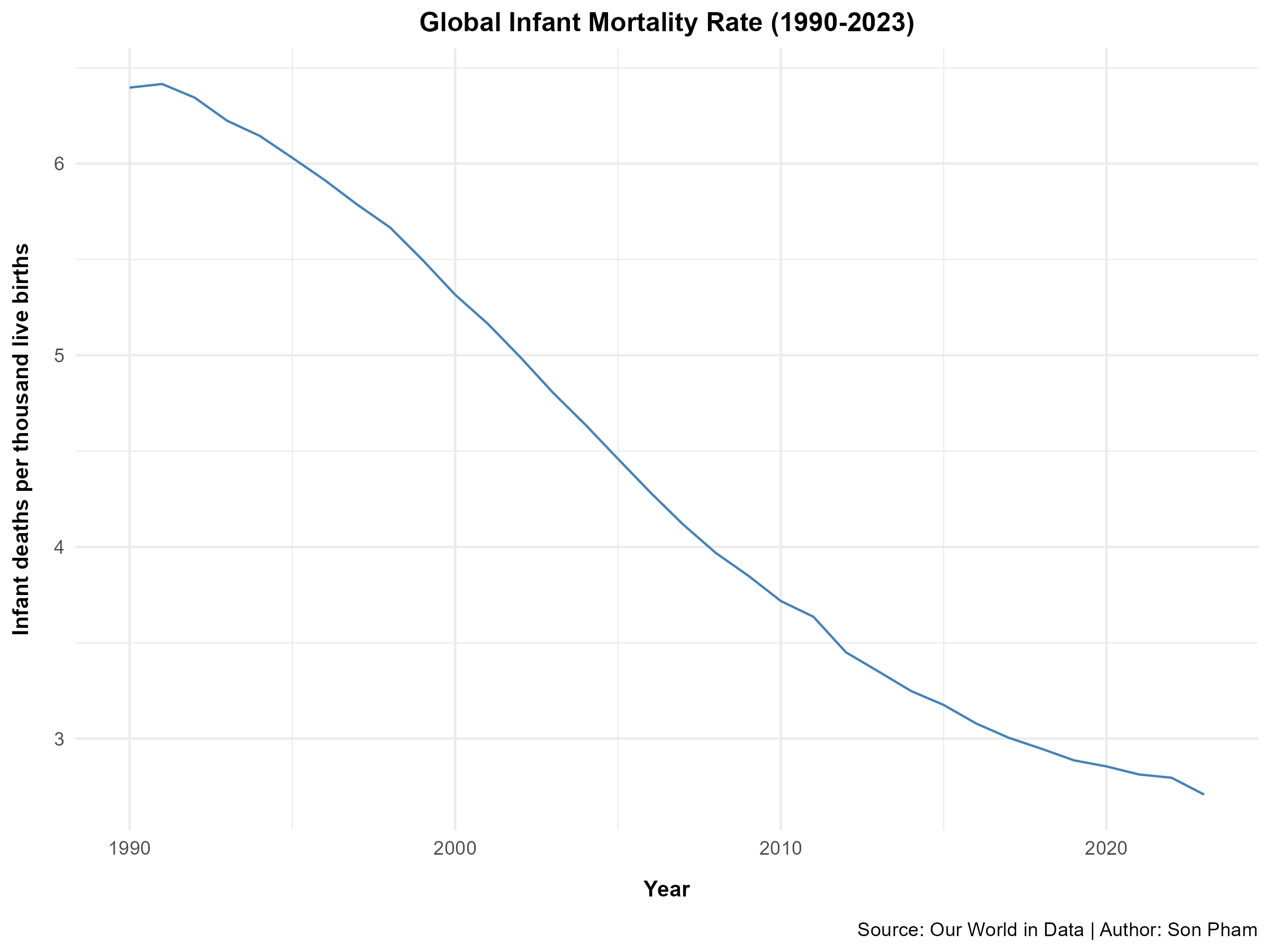
The world has made significant progress in reducing the infant mortality rate. Since 1990, the infant mortality rate has halved from 6.4% to less than 3% by 2023. One major reason for this decline is the increased prevalence of vaccines, according to a study published by Andrew Shattock and a team of researchers. The study finds that vaccines account for over 40% of the perceived decline in infant mortality. The decline may also come as a result of economic development, better healthcare facilities, improvement in living conditions, and greater public awareness.
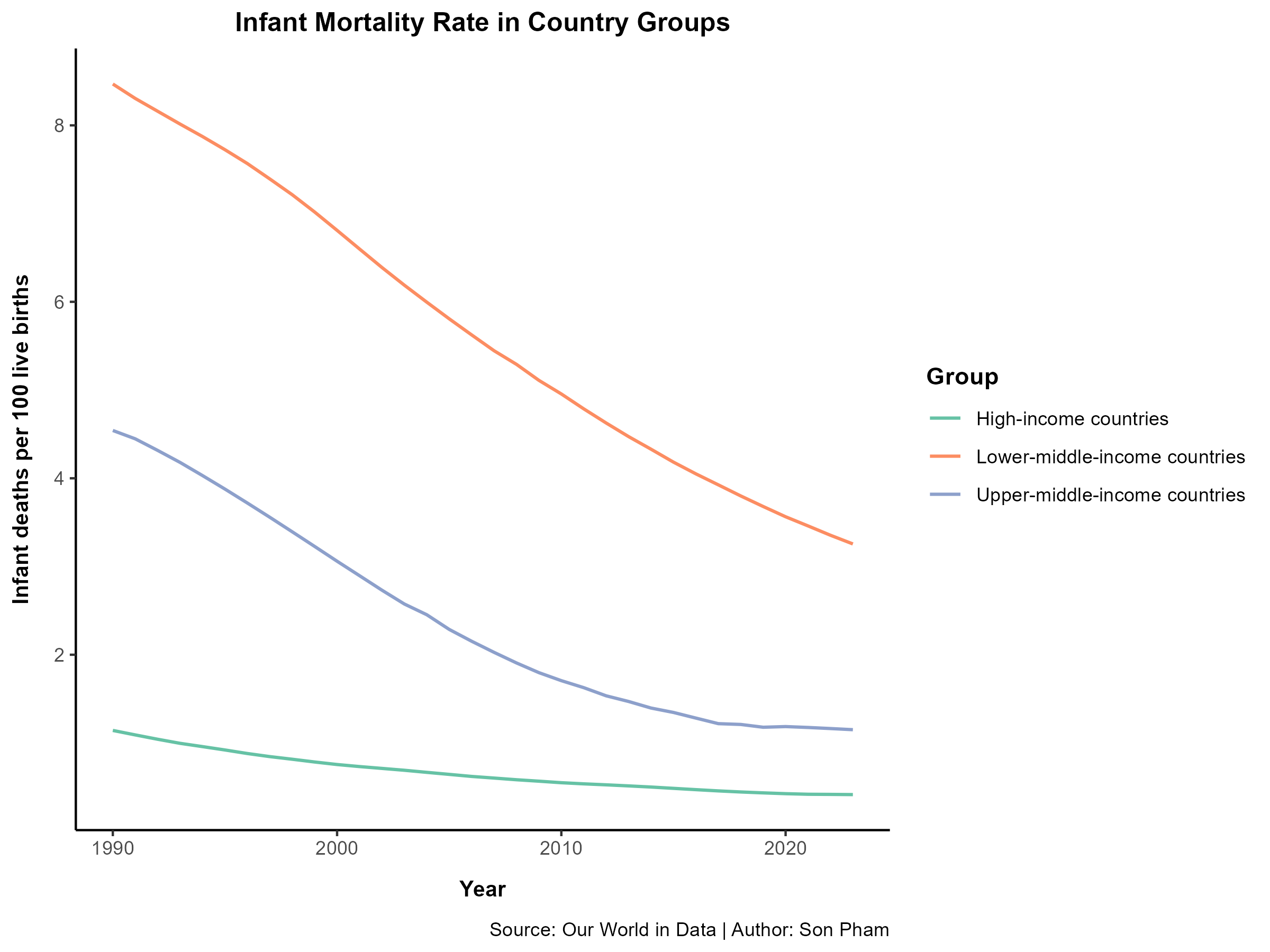
Both developing and developed countries have witnessed significant decreases in the rate of infant mortality. Out of three groups, lower-middle-income countries have the highest infant mortality rate at nearly 4% in 2022, whereas upper-middle-income and high-income countries are much lower. This indicates that significant progress in decreasing infant mortality has been happening on a global scale.
Africa’s infant mortality rate is among the highest in the world
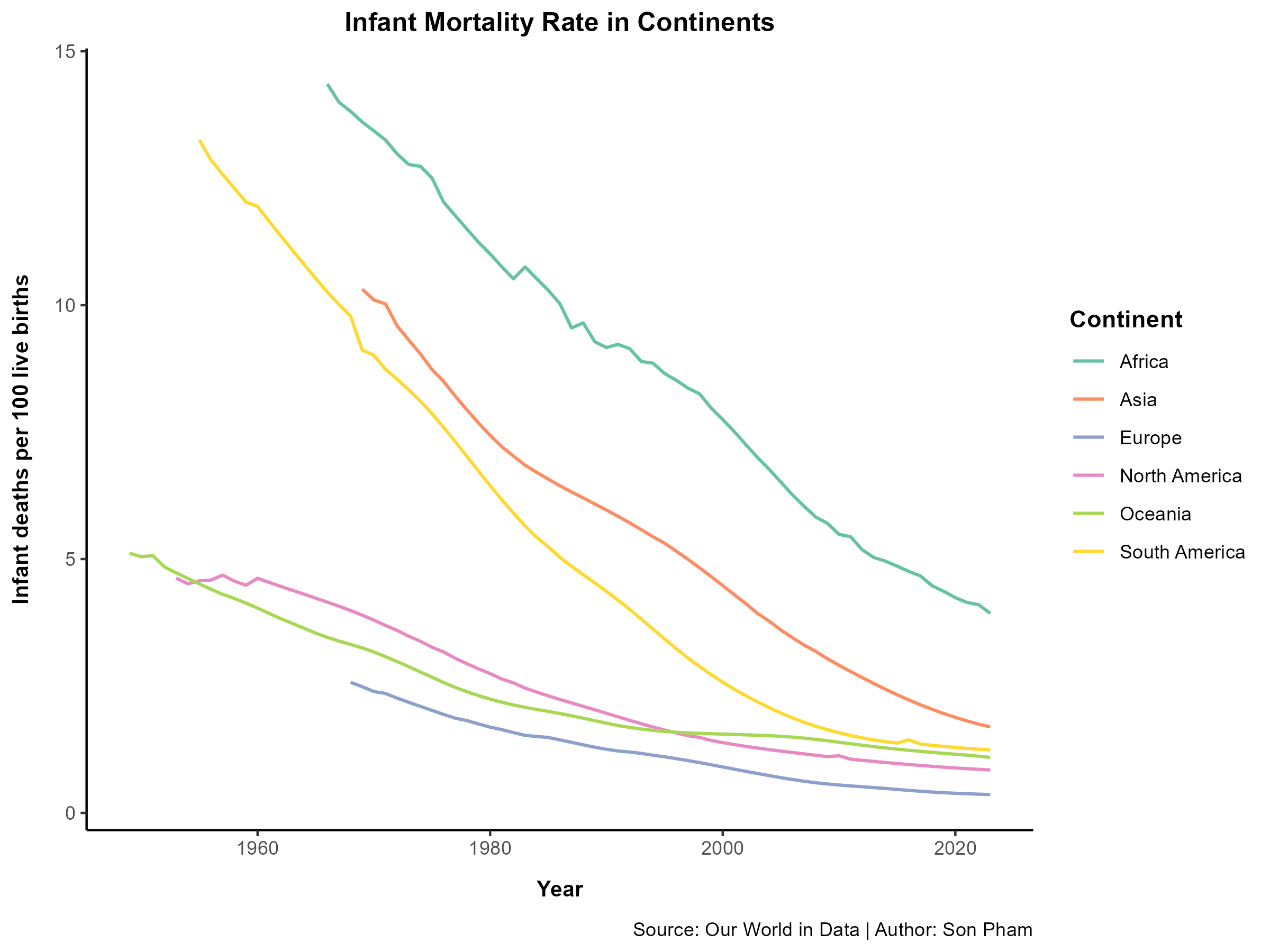
Among the six continents in the data, Africa currently has the highest average infant mortality rate, at nearly 4%. All continents have witnessed declines in infant mortality rate through the years, with Europe being the lowest at just 0.36%. South America has seen a very sharp decline, as its infant mortality rate decreased from over 13% in 1955 to around 1.2% by 2022.
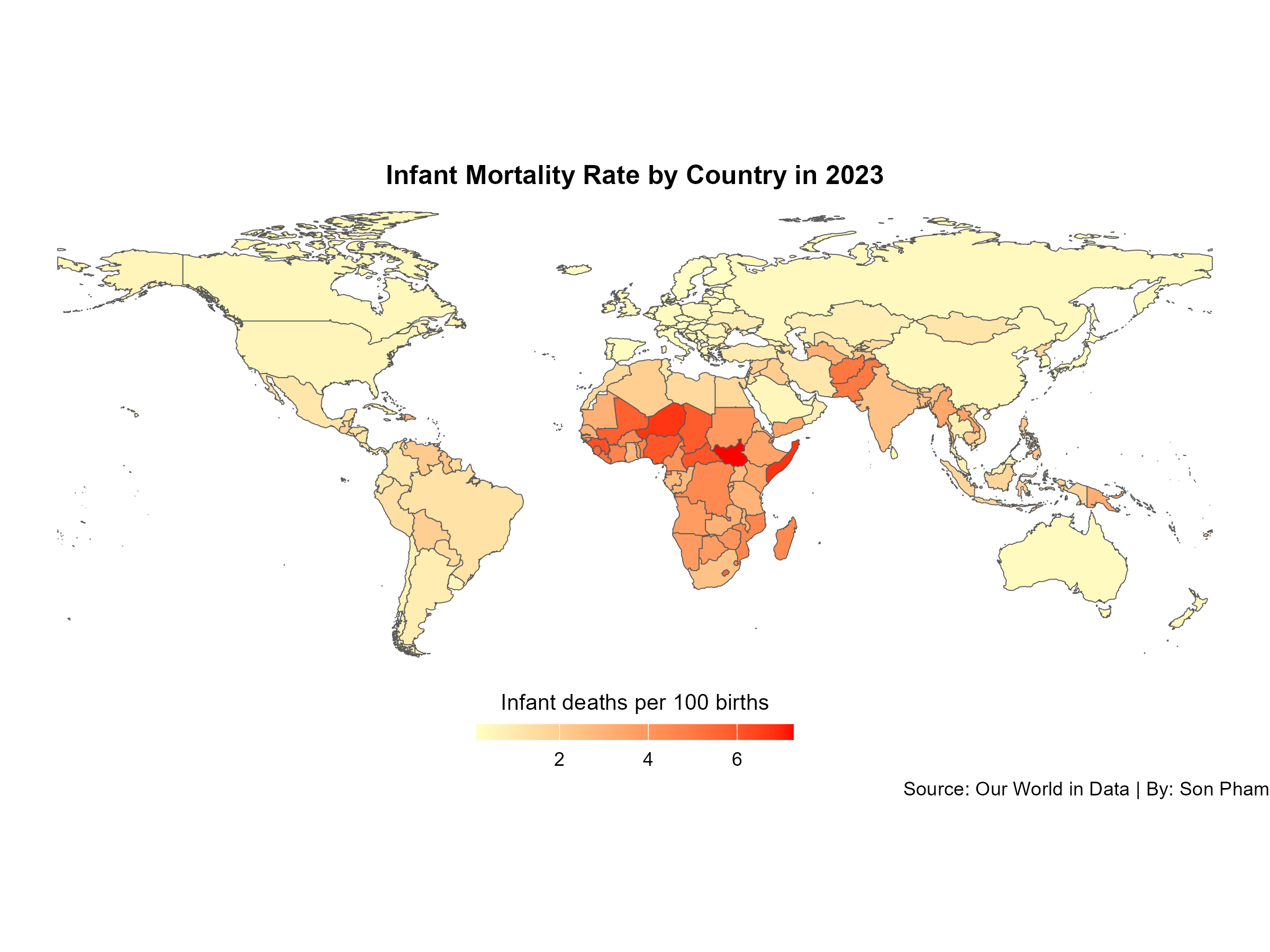
As visible through this world map, countries with high infant mortality are predominantly concentrated in Africa and some parts of Asia as well.
The top 10 countries with the highest infant mortality rate in 2022 were all from Africa. South Sudan is the highest, with a rate of 7.26%, followed by Somalia with 6.78%. Low-income countries in Africa suffer the consequences of decades’ worth of conflict and instability, and the underdeveloped healthcare infrastructure has inhibited disease prevention.
| Country | Infant deaths per 100 births | Continent |
|---|---|---|
| South Sudan | 7.261607 | Africa |
| Somalia | 6.783954 | Africa |
| Niger | 6.736147 | Africa |
| Guinea | 6.154873 | Africa |
| Central African Republic | 6.041326 | Africa |
| Nigeria | 6.009751 | Africa |
| Chad | 5.868753 | Africa |
| Mali | 5.755343 | Africa |
| Sierra Leone | 5.616808 | Africa |
| Lesotho | 5.542296 | Africa |
Infant mortality rate is an indicator of economic development
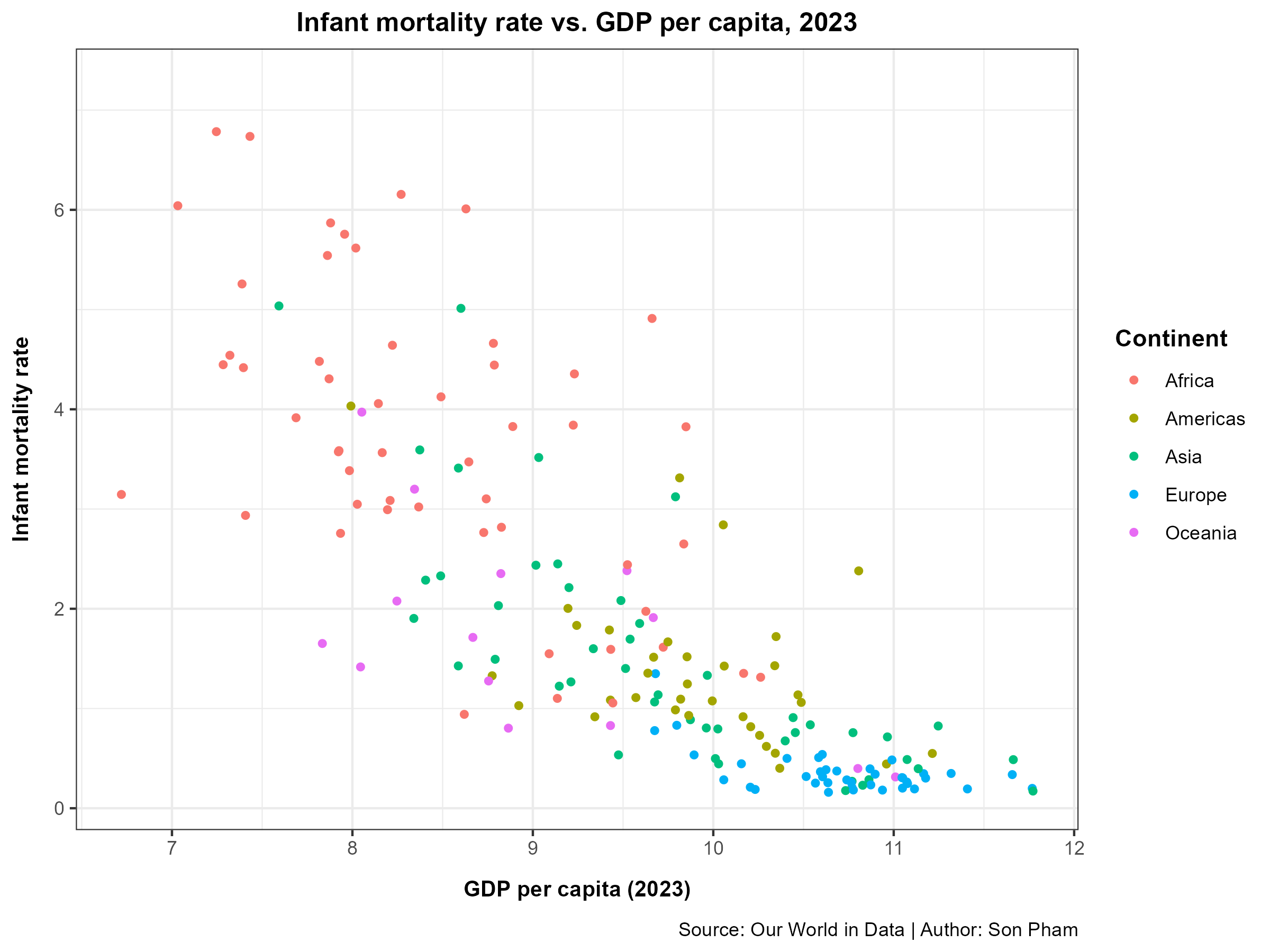
There is a strong negative correlation between a country’s GDP per capita and its infant mortality rate (n = -0.8068666). This indicates that countries with a higher GDP per capita tend to have a lower infant mortality rate. Sub-Saharan African countries are among those with the lowest GDP per capita, and their infant mortality rates are significantly higher than that of other countries.
This may be attributed to advanced healthcare systems, sanitation, nutrition, education and awareness, things that developing countries are currently bereft of. Economic development in Sub-Saharan Africa has continued to stagnate, and the consequences can be devastating if the situation does not continue to improve. It will be very challenging for these countries to reach SDG Target 2.3 at the current rate, according to a 2022 report made by the World Health Organization. While Africa continues to make progress, the COVID-19 pandemic has slowed down much of that momentum.
Therefore, to ensure that developing countries are not left behind, greater emphasis must be placed on improving medical care, increasing quality of life, ensuring sufficient maternal care. Governments must take swift action to improve the situation, and the international community needs to pay closer attention to the situation in Africa to ensure that children can live a long and fulfilling life without fearing imminent death, and to prevent the many family tragedies that persist to this day.